Emerging Scholar Awards

Each year a small number of Emerging Scholar Awards are given to outstanding early-career scholars or graduate students. The Award offers complimentary registration and Network Membership. It provides a robust professional development opportunity for early career academics to meet experts in the field, interact with colleagues from other parts of the world, and create networks and lasting connections. In our model, we have two kinds of Emerging Scholars -- In-Person and Online Only. Across all formats, Emerging Scholars play a critical role in the conference by leading discussions and chairing parallel sessions and are offered a publication pathway for their research. This way, we can provide maximum exposure for this selected group of researchers.

To apply, follow the link below. You may also view further instructions by selecting our "Step-By-Step Guide."

Early Deadline: 25 August 2026
Final Deadline: 25 December 2026

2027 In-Person Recipients

For each conference, a small number of Emerging Scholar Awards are given to outstanding graduate students and emerging scholars who have an active research interest in the conference themes. Emerging Scholars perform a critical role in the conference by chairing the parallel sessions, providing technical assistance in the sessions, and presenting their own research papers. The 2027 Emerging Scholar Award Recipients are as follows:

Nurin Erdiani Mhd Fadzil

Nurin Erdiani Mhd Fadzil

Universiti Purta Malaysia, Malaysia

Dr. Nurin Erdiani Mhd Fadzil is a Senior Lecturer at the Faculty of Modern Languages and Communication, Universiti Putra Malaysia. Her research interests span English language teaching, multimodal learning, educational technology, artificial intelligence, language assessment, discourse, and ecolinguistics. Her work explores the ways language and technology shape learning, communication, and engagement with contemporary social and environmental issues. Her current research is increasingly situated at the intersection of language, sustainability, and environmental discourse, with a particular interest in how narratives surrounding climate change and ecological issues are constructed and communicated. She is committed to developing meaningful, interdisciplinary research that connects language, education, and wider societal concerns.

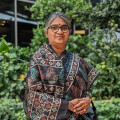
Rani P. L.

Rani P. L.

Sri Sathya Sai Institute of Higher Learning, India

A Professor of English, Dr. Rani P. L., currently serves also as the Director of the Women’s Campus of Sri Sathya Sai Institute of Higher Learning, AP, India. An academic with 3 decades of teaching experience, her research interests lie in post-colonial literature, media linguistics, ELT, and cli-fi. She is the co-author of From the Colonial to the Carnival: The Indian Tale of an English Game, discussing Indian cricket from a postcolonial perspective. An avid reader, an engaging writer and an inspiring speaker, Prof. Rani also supervises research, publishes papers, edits meticulously and delivers high-impact talks.

2027 Online Only Recipients

For each conference, a small number of Emerging Scholar Awards are given to outstanding graduate students and emerging scholars who have an active research interest in the conference themes. Emerging Scholars perform a critical role in the conference by chairing the parallel sessions, providing technical assistance in the sessions, and presenting their own research papers. The 2027 Emerging Scholar Award Recipients are as follows:

Daniel White

Daniel White

University of Technology, Australia


Dr Daniel White is a Lecturer in Psychology at the University of Technology Sydney whose work spans psychology, education, behavioural science, and emerging technologies. He leads the Nature-Based Solutions Research Team and established the AI, Learning and Knowledge Practices Lab, where he explores the impact of generative AI on learning, teaching, and research practice. His research examines human-AI interaction, behaviour change, student engagement, and the psychological factors that influence learning and decision-making. Drawing on experience across secondary, vocational, and higher education, Daniel develops innovative, evidence-informed approaches to teaching and curriculum design that support meaningful learning, capability development, and the responsible use of artificial intelligence in education and research.


Renata Aparecida Santos

Renata Aparecida Santos

UFRJ, Brazil

Renata Aparecida Santos is a Brazilian English teacher, Pedagogical Supervisor, and Master’s student in Linguistics at the Federal University of Rio de Janeiro (UFRJ). Her work brings together language education, second language acquisition, bilingual education, and innovative approaches to teaching and learning. Her current research examines subject realization in written English produced by Brazilian learners in a bilingual school context. As a Pedagogical Supervisor, she supports teacher development , connecting research with classroom practice. She is particularly interested in learner-centered, human-centered, and inclusive approaches to language education and in creating meaningful connections between linguistic research and educational innovation.


Abhishek Kumar

Abhishek Kumar

Manav Rachna University, India

Abhishek is an educator and researcher, leading education programmes at Humana People to People India. His work spans research, educational programme design, educational content development, teacher training, and arts-based and digital pedagogies. He has facilitated worked with different organisations, students, teachers, educators, artists, and education functionaries in India and the UK. He has authored publications on education and presented at national and international academic forums, including the ‘Reimagining Teachers and Teacher Education for Our Futures Conference’ at the University of Helsinki, Finland. His work has received the Ford Foundation Fellowship, AFG Fellowship, IFPA Award, Tagore National Scholarship, and Senior Fellowship.

Haida Umiera Hashim

Haida Umiera Hashim

Academy of Langauge Studies, Universiti Teknologi Mara Shah Alam, Malaysia

Haida Umiera Hashim (PhD) is a passionate educator and researcher in Technology-Enhanced Language Learning (TELL), with a Ph.D. in TESL from Universiti Kebangsaan Malaysia. Currently serving as a lecturer at Universiti Teknologi MARA, she has extensive teaching experience across foundational and advanced English courses in higher education. Her research focuses on inclusive and innovative digital pedagogies, with a particular emphasis on EdTech applications for special education and ESL learners. Dr. Haida is the co-creator of award-winning innovations such as AReal-Vocab, an augmented reality mobile app designed to support English vocabulary acquisition for children with autism, which has earned gold medals at international invention competitions. She has developed micro-credential courses, supervised interdisciplinary research on AI, AR/VR, and gamification, and actively contributes to the academic community as a keynote speaker, journal editor, and reviewer. Her work bridges the gap between inclusive education and digital innovation, making her a valuable contributor to discussions on equitable and technology-driven learning environments.

In Their Words

Being part of the Emerging Scholars program was an inspiring experience that allowed me to share my research, connect with a global community of educators, and grow both professionally and personally. I'm grateful for the opportunity to engage with innovative ideas and contribute to meaningful conversations about the future of education."

Mª Lina Higueras Rodríguez, 2025 Awardee

Being an Emerging Scholar provides me with a unique opportunity to connect with fellow attendees and speakers, fostering meaningful relationships and gaining insights into the stories behind their work. I also build friendships with other amazing emerging scholars who come from different backgrounds, exchanging knowledge and cultural insights. It's a valuable experience that goes beyond just learning."

Caelen Siow, 2024 Awardee

It was a wonderful opportunity to network with the scholars in your field and see how they are doing in other parts of the world. I made connections with some very interesting people who may be helpful to collaborate in research projects in the future."

Nadeem Saqlain, 2017 Awardee